What is Invoice Financing?
Invoice financing is a way for your business to unlock money tied up in unpaid invoices, giving you faster access to cash you’ve already earned. Instead of waiting weeks or months for customers to pay, you can use invoice financing to get a large part of your invoice value right away. This means you can keep your operations running smoothly, pay your team, and cover daily expenses without being held up by late payments.

This approach is especially useful when your business needs quick working capital or wants to avoid the stress of cash flow gaps. Many companies use this financial tool to grow faster, manage their bills, or take on new projects. If you want to learn how invoice financing works and decide if it’s right for your business, keep reading to get a clearer picture and practical tips.
Invoice financing lets you unlock cash tied up in unpaid invoices. It is a way to improve your business’s cash flow, meet commitments, and keep daily operations running smoothly.
How Invoice Financing Works
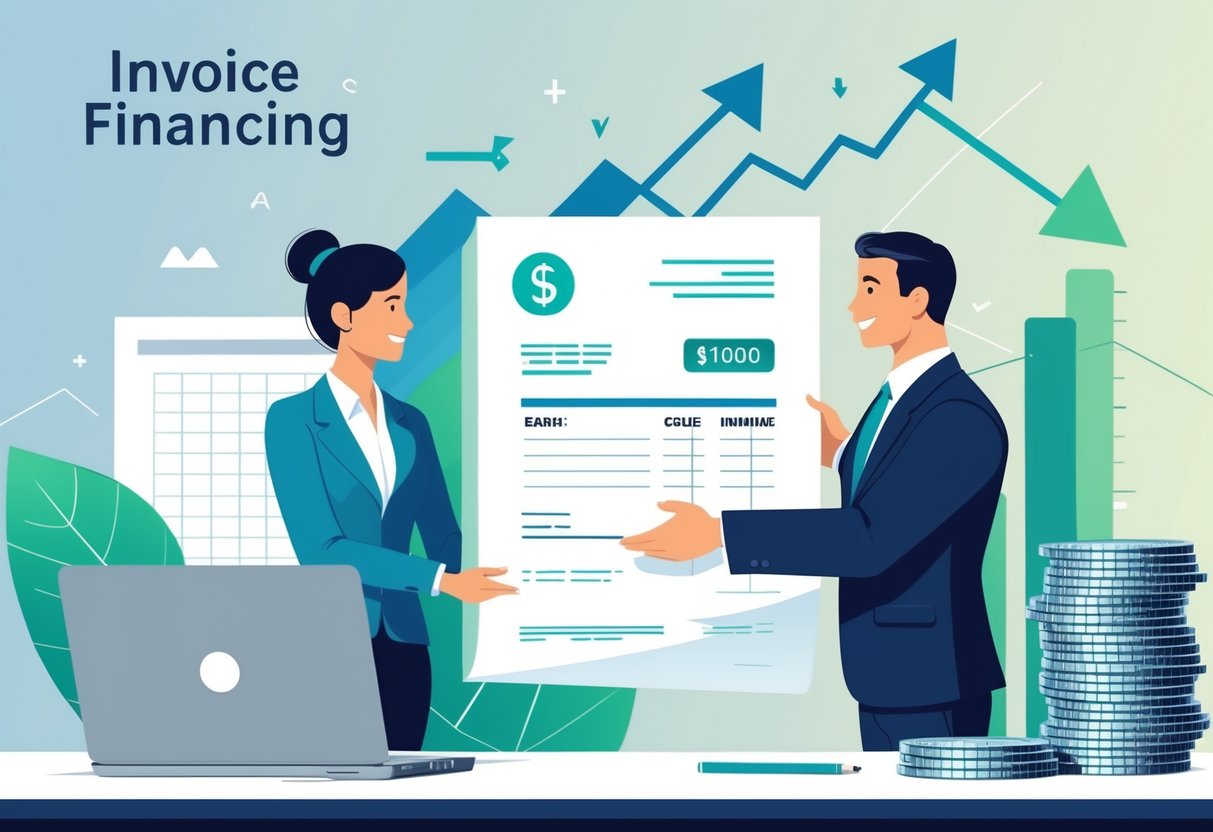
When you sign up for invoice financing, you send your invoices to a finance provider. They review the invoices and provide you with a percentage of their total value—typically up to 85%. The remaining balance is paid to you when your customer pays the invoice, minus any fees or charges.
The process is simple:
- You provide goods or services and issue an invoice.
- You submit the invoice to the finance provider.
- You receive most of the invoice’s value as an advance.
- Your customer pays the invoice.
- You receive the remaining amount, minus fees.
This service helps you bridge the gap between sending an invoice and receiving payment. It can be especially helpful for businesses with long payment terms or unpredictable cash flow. More details can be found in CommBank’s guide to invoice financing.
Types of Invoice Financing
There are two main types of invoice financing: factoring and discounting.
With factoring, the finance company takes over the collection of your receivables. Your customers may pay them directly. This can save you time but often means your customers know you are using invoice finance.
With discounting, you remain responsible for collecting payments from your customers. Your clients do not know you are using invoice financing. This option usually offers greater privacy.
Both types help you access funds quickly and can be used as needed. Some banks and specialist providers offer flexible agreements that let you choose which invoices to finance.
Key Benefits of Invoice Financing

Invoice financing can help a business solve cash crunches, keep operations running smoothly, and adjust to changes in customer payment schedules. This form of funding offers different advantages for improving your business’s money flow and flexibility.
Improved Cash Flow
With invoice financing, you no longer have to wait the usual 30 to 90 days for customers to pay you. Instead, you get most of the value of your invoices right away. This means you can pay your staff, restock your inventory, and handle bills on time.
A steady flow of money makes it easier to keep your business activities going without interruption. It can also help your business avoid taking on new debt just to manage day-to-day expenses.
Having quick access to funds from unpaid invoices helps you plan ahead more confidently. This is especially important for small and medium-sized businesses that can’t afford to wait for long payment cycles.
Flexible Funding Solutions
Invoice financing does not work like a traditional business loan. You get funding based on the value of your current unpaid invoices instead of your entire credit history.
This flexibility allows you to access only the amount you need, when you need it. You can choose to finance just one invoice or several at a time. Many providers offer different options, from short-term cash advances to ongoing credit lines.
Flexible funding can help match your business needs as they change throughout the year. You are not locked into a fixed loan schedule, and you can adjust how much you use depending on your workload, busy seasons, or business growth.
Faster Access to Working Capital
Invoice financing gives you much quicker access to working capital than most loans or lines of credit. Once you submit your invoices to a financier, you can often get up to 80-90% of their value in as little as 24 hours.
Getting rapid funding helps keep your business liquid, so you can take advantage of new opportunities right away. You do not have to wait for a long approval process or fill out lots of paperwork.
Having faster access to funds makes it easier to respond to unexpected costs, handle large customer orders, or invest in business growth. This boost in working capital can support both daily operations and longer-term goals.
Main Models of Invoice Financing
There are two main models of invoice financing used by businesses to access cash quickly: invoice factoring and invoice discounting. Both give you access to the value of unpaid invoices, but they work in different ways and have unique benefits and considerations.
Invoice Factoring
With invoice factoring, you sell your unpaid invoices to a third party called a factor. The factor usually pays you a large percentage, often 80% to 90%, of the invoice value up front. When your customer pays the invoice, the factor gives you the rest, minus fees.
One important detail is that your customers will know you use factoring because the factor handles collecting the payments. This can save you time if you spend a lot of effort on collections, but it could also affect how your customers view your business. Factoring is helpful if you need cash quickly and want to outsource the task of collecting payments.
Factoring is common for businesses with many accounts receivable and those that do not want to wait weeks or months for customers to pay.
Invoice Discounting
Invoice discounting is different because you keep control over your sales ledger and collections. You borrow money using your outstanding invoices as collateral. The lender gives you a loan for a percentage of your accounts receivable value.
Unlike factoring, your customers do not know you are using invoice discounting because you remain responsible for collecting payments. This keeps your customer relationships private. When customers pay, you repay the loan plus a fee or interest.
Invoice discounting is good for businesses that have reliable customers and want to manage collections themselves. It offers more control, but you are still responsible if customers do not pay. You can find more details about invoice discounting at MYOB.
How the Invoice Financing Process Works
Invoice financing gives you quick access to working capital by using your unpaid invoices as collateral. The process has a few clear steps: you submit your receivables, the lender provides funding, and the loan is repaid once your customers pay their invoices.
Submitting Outstanding Invoices
To start, you provide your lender with a list of your unpaid or outstanding invoices. These are invoices you have already sent to your customers, but the customers have not yet paid them.
You must show proof that these receivables are valid, such as by sending copies of the invoices and details about each customer. Lenders often check that your customers have a good payment history.
Submitting accurate information is important since the lender relies on the value and legitimacy of these receivables. Once reviewed and approved, the lender confirms which invoices will be used for financing. This way, you can turn your accounts receivable into a source of fast cash flow.
Funding Against Receivables
After your invoices are approved, the lender gives you a percentage of the invoice value as an advance. It is common for lenders to offer anywhere from 70% to 90% of the invoice’s total amount. For example, if you have $10,000 in outstanding invoices, you might receive an advance of $7,000 to $9,000.
You usually get these funds within one or two days, which can help cover operating expenses or manage cash flow gaps. The lender holds back the rest of the invoice amount until your customer pays. Fees for this service are also deducted from the remaining balance. This type of financing, known as invoice finance, is useful for companies with lots of outstanding accounts receivable who need quick access to cash without waiting for customers to pay.
Repayment and Debt Collection
Once your customer pays the invoice, the lender keeps their fees and gives you the remaining funds. Some lenders, especially invoice factoring companies, handle the collection of payment directly from your customers. In other cases, you might remain responsible for collecting payment, and then you forward the money to the lender.
If the customer pays late or not at all, you might be required to repay the advance, depending on the agreement. This step helps you avoid long delays in getting paid and can also ease the strain of chasing down payments. Working with a lender who manages debt collection can free up your time but may also mean your customers will know you are using invoice financing.
Risks and Considerations
Invoice financing can help your business deal with cash flow problems and late payments. However, there are some risks and costs involved that can affect your finances and how you work with customers.
Non-Payment Risk
When you use invoice financing, you receive money based on the value of your invoices. If your customer fails to pay the invoice, you may be responsible for the debt. This is known as non-payment risk or bad debt.
Some invoice financing providers offer “non-recourse” plans that protect you against customer non-payment. Others use “recourse” plans, where you must cover the loss if your customer doesn’t pay. It is important to review your agreement to understand who is responsible. Non-payment can lead to extra fees or even loss of goods or services delivered.
Knowing your customers’ track record and credit history can help you lower the chance of non-payment. You can read more about the risks of invoice financing and managing non-payment.
Financial Penalties and Interest
Most invoice financing agreements come with fees, penalties, and sometimes high interest rates. If the invoice stays unpaid longer than expected, interest builds up, and you might face penalty charges.
Common costs include:
- Initial setup fees
- Service fees based on invoice amount
- Interest charges on the advance
- Late payment fees
These expenses can make financing costly if not paid back quickly. You need to compare the fees and interest with other borrowing options. Some lenders may also have hidden charges, so check contract details carefully.
Impact on Customer Relationships
When you use invoice financing, a third party may contact your customers to collect payment. This can affect your customer relationships and may cause confusion or raise concerns about your business’s stability.
Clear communication with customers helps set expectations when a financing provider may reach out. If handled poorly, customers might think you are having money problems or distrust the process. In some cases, your customers’ experience may be impacted by stricter payment demands set by the financing company.
To maintain strong relationships, keep your customers informed and choose providers who act professionally when interacting with your clients.
Comparing Invoice Financing to Other Funding Options
Invoice financing lets you unlock cash tied up in unpaid customer invoices quickly. Other options like business loans, overdrafts, and trade credit insurance all work differently and have their own pros and cons.
Business Loans and Overdrafts
Business loans are a common way to get a lump sum of cash for your company. You borrow a set amount and then repay it with interest over time. These loans often require strong credit or collateral. Approval can take a while.
A business overdraft lets you take out more money than you have in your account up to a set limit. It can help cover short-term cash shortages but usually has high interest rates on the overdrawn amount. Overdrafts may also need a strong relationship with your bank.
In contrast, invoice finance gives you fast access to funds based on outstanding invoices, not just your credit rating. You usually do not need to pledge assets as security. This makes invoice financing a quick option if you need working capital for day-to-day expenses or growth.
Non-Banking Funding Sources
Non-banking sources include angel investors, venture capital, crowdfunding, and peer-to-peer lending. These options are not linked to a bank or lending institution.
- Angel investors and venture capital firms may invest in your company for equity.
- Crowdfunding lets you gather small amounts of money from a large group of people, often in exchange for a product or reward.
- Peer-to-peer (P2P) lending connects you directly with individual lenders online.
These routes take more time and may require giving up ownership or sharing profits. Non-banking funding works best if you need investment, not just short-term cash. Invoice financing works differently—you keep control and get funding tied directly to your accounts receivable, not your business plan or pitch.
Trade Credit Insurance
Trade credit insurance protects your business when customers fail to pay their invoices. This service is more about risk management than an actual funding source.
With trade credit insurance:
- You pay a premium for coverage.
- If a customer defaults, the insurer pays most of the outstanding debt.
This insurance helps you manage bad debt, but it does not give you access to cash up front. Invoice financing, on the other hand, helps you improve cash flow quickly by advancing money against unpaid invoices rather than covering losses after non-payment.
Selecting the Right Invoice Financing Provider
Choosing an invoice financing provider means reviewing key details like payment terms, fees, and the services offered. Each provider may offer different benefits, so it is important to look closely at specifics.
Assessing Terms and Fees
Payment terms and fees should be clear and easy to understand. Some providers charge a fixed fee, while others use a percentage of each invoice. Advance rates often range between 70% and 90%.
You should ask if there are extra costs, such as setup fees or monthly minimums. Look at when you will receive your funds after submitting invoices. Fast funding can help with your cash flow.
Comparing different providers can help you spot hidden charges. Some providers also set limits on the total value of invoices you can submit.
Key Points to Check:
- Advance rate (what percent you get upfront)
- Funding speed
- All fees and charges
- Contract length and exit terms
Understanding Service Offerings
Different providers offer different types of services. Some only work with certain industries. Others may be business banking specialists, and some include features like debtor management or credit checks.
Factoring and discounting are common services. Factoring often includes managing your accounts receivable, while discounting keeps you in control of collections. Decide if you want to hand over your whole sales ledger or just use the service for select invoices.
Providers can also offer online portals, credit risk checks, and customer support. Check if the provider integrates with your accounting software.
Make sure the provider’s services fit your business needs and growth plans.
Industries and Businesses That Benefit from Invoice Financing
Invoice financing helps many businesses smooth out income, speed up access to cash, and avoid delays from late-paying clients. It is popular among both fast-growing companies and those experiencing cash flow shortages.
SMEs and Growing Enterprises
Small and medium-sized enterprises (SMEs) use invoice financing to get paid faster without waiting the usual 30, 60, or even 90 days for customers to settle their bills. If your business is growing, you may need extra working capital to take larger orders, buy new equipment, or hire staff. Invoice financing can help you unlock funds from unpaid invoices so you can seize these opportunities when they come.
Manufacturing, wholesale, and distribution are just a few sectors where this solution is popular. Manufacturers, for example, often face large gaps between shipping goods and receiving payment. Using invoice financing helps you bridge that gap and maintain steady operations.
This type of financing can be ideal if your sales are growing faster than your access to capital. Unlike traditional loans, it does not create new debt on your balance sheet since it simply speeds up the money you have already earned.
Businesses with Cash Flow Issues
Many businesses struggle with cash flow because clients and customers do not always pay on time. If you find it difficult to pay suppliers, staff, or cover daily costs, invoice financing lets you access cash that’s trapped in unpaid invoices. This is a common challenge in industries like construction, transport, and retail, where payment terms can stretch over several weeks or months.
With this method, you can stabilize your company’s financial turnover and avoid late payment penalties. Invoice financing works especially well if most of your sales are on credit terms, rather than paid upfront. By turning unpaid invoices into immediate working cash, you can meet obligations or cover emergencies without extra borrowing.
This type of solution offers flexibility. Unlike some loans or overdrafts, it grows with your sales volume and does not require lengthy approval stages. You only use it when you need, and fees are typically based on the invoice amount.